
Traditional institutions across Africa can become powerful engines of economic growth, employment generation and community security if they leverage their moral authority to mobilise cooperative investment and grassroots enterprise development, Founder and Pro-Chancellor of Achievers University, Prof. Bode Ayorinde, has said.
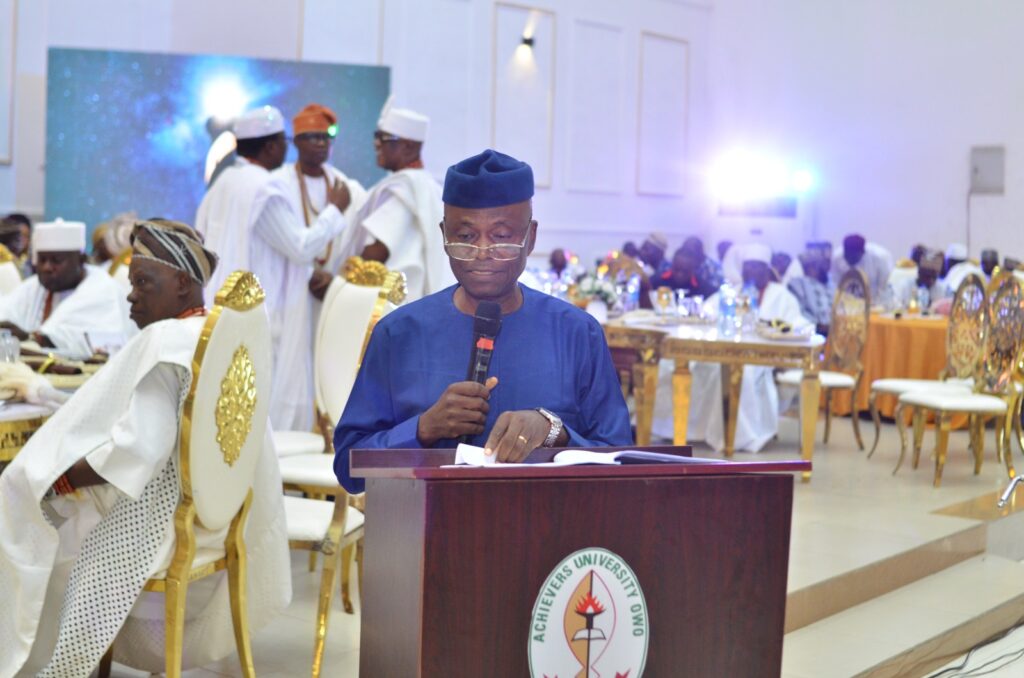
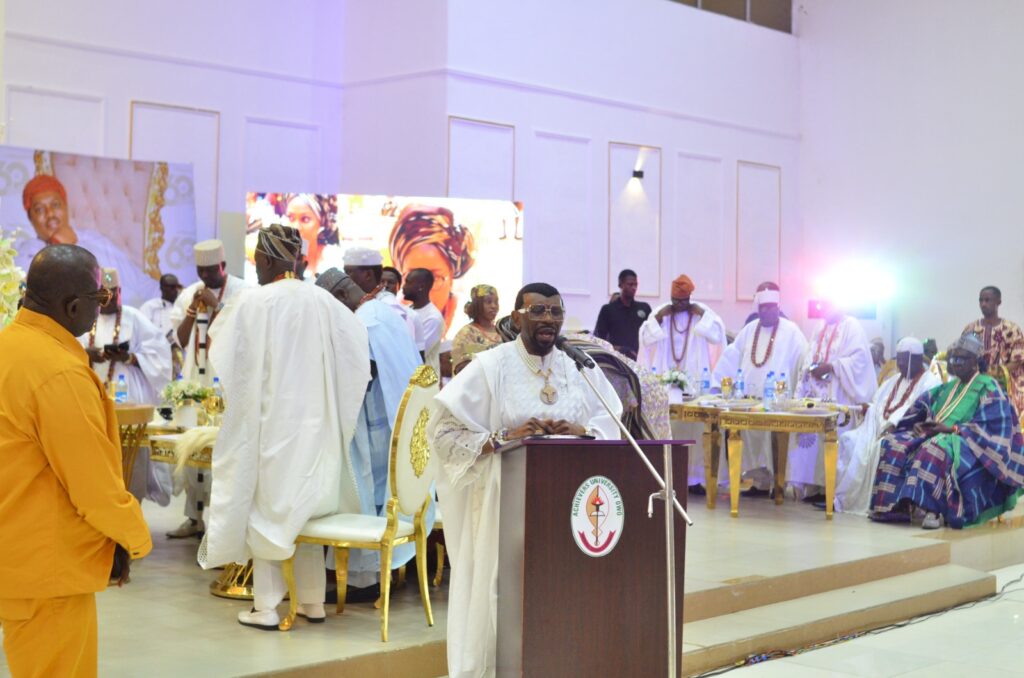
Prof. Ayorinde made the assertion while delivering the keynote lecture at the 60th Birthday Celebration of His Imperial Majesty, Oba Ajibade Gbadegesin Ogunoye III, the Olowo of Owo, where he unveiled a development framework that positions royal institutions as conveners of community-owned economic initiatives.
Speaking on the theme, “Community Development through Cooperative Society: The Strategic Role of the Palace,” the legal scholar argued that while constitutional governance may have altered the formal powers of traditional rulers, their legitimacy, trust capital and ability to mobilise citizens remain unmatched.
“Governments come and go. Political parties change. Public officials complete their tenures. The throne, however, remains the permanent symbol of communal identity,” Prof. Ayorinde stated.
He described traditional institutions as custodians of social capital capable of converting communal trust into productive investment through professionally managed cooperative structures that create jobs, attract capital and strengthen local economies.

Drawing from successful cooperative models in Europe, Asia and Africa, he cited examples from India, Denmark, Kenya, Rwanda and Japan to demonstrate how communities around the world have transformed agriculture, healthcare, housing and finance through collective ownership and local leadership.
As part of a proposed development blueprint for Owo Kingdom, Prof. Ayorinde recommended the establishment of an Owo Community Development Council (OCDC) to identify, incubate and support commercially viable community-owned ventures across strategic sectors of the economy. The model would see the palace provide leadership and legitimacy, professionals provide governance and technical expertise, and citizens become investors and shareholders in enterprises designed to create sustainable prosperity.
“The Palace becomes the convening institution; the cooperative becomes the development instrument; the people become investors rather than spectators; and the community becomes the ultimate beneficiary,” he said.
Prof. Ayorinde pointed to the establishment of Achievers University as evidence of the transformative potential of collective ownership, noting that the institution emerged through the shared vision and investment of stakeholders who pooled resources to establish what has become the first private university in Ondo and Ekiti States.
He further urged communities to move beyond philanthropy-driven development models towards investment-led approaches capable of generating intergenerational wealth and enduring institutions.
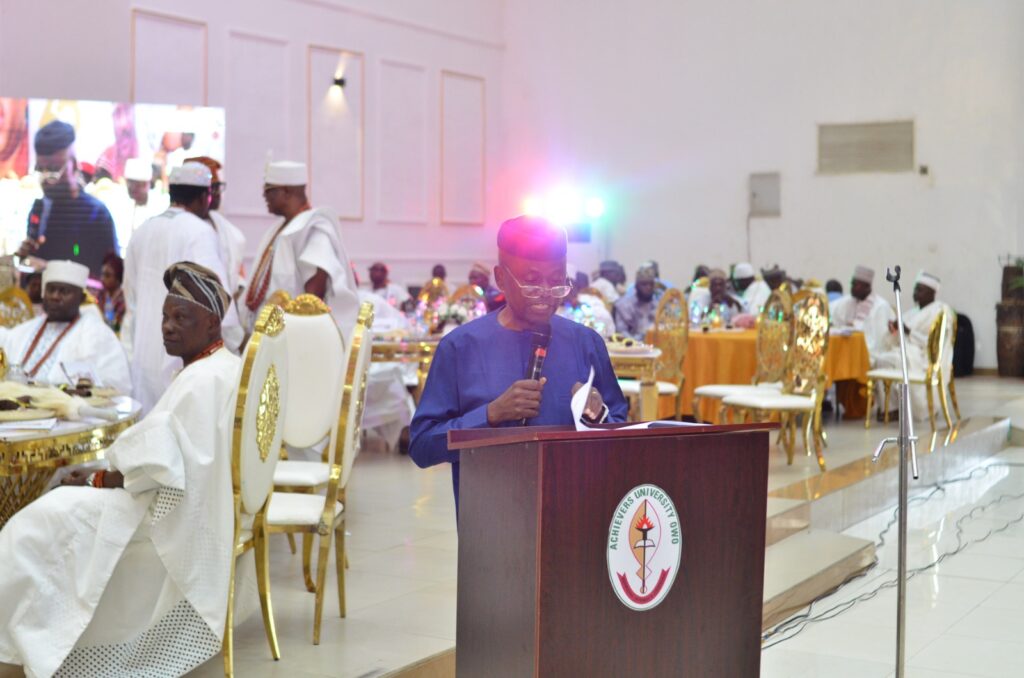
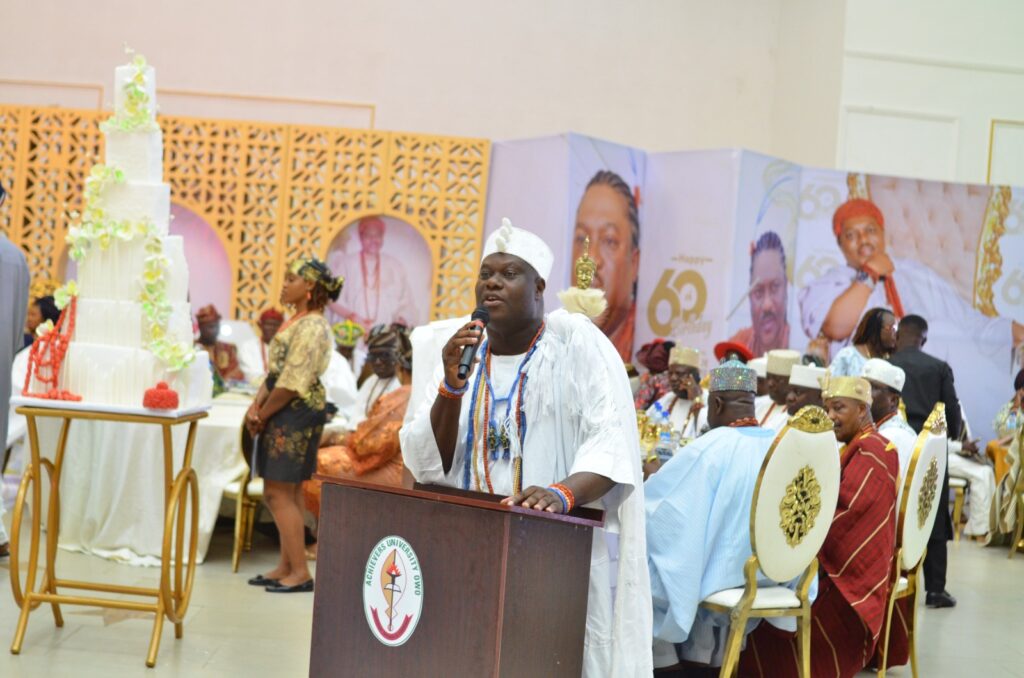
The lecture was one of the major intellectual highlights of activities commemorating the 60th birthday anniversary of the Olowo of Owo, whose reign has been widely recognised for promoting peace, cultural preservation and community development in Owo Kingdom.
Concluding his address, Prof. Ayorinde challenged communities to take ownership of their development agenda.
“Development begins with a decision — a decision that we will not wait, that we will not beg, and that we will not be spectators in our own story,” he said.
The 60th birthday anniversary of the Olowo of Owo was chaired by His Imperial Majesty, Arole Oodua, Alayeluwa Oba Adeyeye Enitan Ogunwusi, Ojaja II, CFR, the Ooni of Ife. The event was attended by notable dignitaries including the Executive Governor of Ondo State, His Excellency Hon. Dr. Lucky Orimisan Ayedatiwa; former CAN President, Pastor Ayo Oritsejafor; traditional rulers from far and near; government officials; and Owo sons and daughters from across the world.